
Atlanta Georgia Pedestrian Accident Lawyer: Know Your Rights Before It’s Too Late
If you’ve been hit by a car and need a Georgia pedestrian accident lawyer, here’s what you need to know right away:
- You have 2 years from the date of the accident to file a lawsuit in Georgia
- Georgia’s comparative fault rule means you can still recover damages even if you were partly at fault — as long as you were less than 50% responsible
- You can recover medical bills, lost wages, pain and suffering, and more
- Insurance companies will try to minimize your payout — having legal representation significantly improves your outcome
- Evidence disappears fast — witness memories fade, cameras get overwritten, and skid marks wash away
Georgia’s roads are among the most dangerous in the country for people on foot. In 2022 alone, 236 pedestrians were killed in traffic crashes across the state — about 19% of all traffic deaths that year. Pedestrian fatalities have climbed 42% over the past decade, and Georgia now ranks 10th in the nation for pedestrian death rates. Behind every one of those numbers is a real person — and often, a family left fighting for answers and fair compensation.
Being struck by a vehicle changes everything in an instant. Medical bills pile up. Paychecks stop coming. And insurance adjusters start calling before you’ve even left the hospital.
You deserve to understand your rights — and your options.
I’m Kim Perkins, a trial lawyer with deep experience in personal injury and motor vehicle accident cases across Georgia, including complex Georgia pedestrian accident lawyer cases where victims face serious injuries and aggressive insurance defense. If you or someone you love has been hurt on Georgia’s streets, understanding what comes next — and acting quickly — can make all the difference in your recovery.

Must-know georgia pedestrian accident lawyer terms:
Causes and Pedestrian Rights Under Georgia Law
Walking along or across streets in Atlanta and throughout Georgia should not be a life-threatening activity. Yet, traffic safety data shows an alarming upward trend in pedestrian injuries and fatalities. Over 70% of pedestrian accidents in Georgia happen at non-intersection locations. Drivers frequently fail to yield, speed through heavily populated corridors, or drive while distracted by smart devices.
When a multi-ton passenger car, truck, or SUV strikes an unprotected human body, the results are almost always devastating. Common drivers of these incidents include:
- Distracted Driving: Texting, adjusting navigation systems, or talking on the phone prevents drivers from noticing someone stepping off a curb.
- Failure to Yield: Drivers making left or right turns at signals often focus solely on oncoming motor traffic, completely ignoring pedestrians in crosswalks.
- Speeding and Aggressive Driving: High speeds dramatically reduce a driver’s reaction time and significantly increase the physical impact force on a pedestrian.
- Driving Under the Influence: Alcohol and drug impairment severely diminish judgment, spatial awareness, and response times.
- Low Visibility Conditions: Poor street lighting and inadequate urban infrastructure make it harder for drivers to spot walkers at night.
Regardless of the specific scenario, state traffic laws provide clear protections for people on foot. If you are struggling after being struck by a vehicle, consulting a dedicated Pedestrian Accident Lawyer Atlanta can help clarify how state statutes apply to your incident.
Georgia Right-of-Way Laws Explained
Georgia Code Title 40 contains strict regulations governing the interplay between pedestrians and motor vehicles. A central legal mandate is O.C.G.A. § 40-6-91, which requires drivers to yield the right-of-way to a pedestrian crossing the roadway within any marked crosswalk or within any unmarked crosswalk at an intersection.
Key aspects of state right-of-way law include:
- Crosswalk Protections: When traffic control signals are not in place or not in operation, a driver must stop and remain stopped to allow a pedestrian to cross if the pedestrian is upon the half of the roadway upon which the vehicle is traveling, or approaching so closely from the opposite half as to be in danger.
- Traffic Control Signals: Pedestrians must obey “Walk” and “Don’t Walk” signals. However, if a pedestrian legally enters a crosswalk while the signal displays “Walk,” turning vehicles must still yield until the pedestrian reaches safety.
- Due Care Mandate for Drivers: Under O.C.G.A. § 40-6-93, every driver is legally required to exercise due care to avoid colliding with any pedestrian upon any roadway. Drivers must give warning by sounding their horn when necessary and exercise proper precautions upon observing any child or any obviously confused, incapacitated, or intoxicated person.
- Jaywalking Regulations: Pedestrians crossing a road at any point other than within a marked crosswalk or an unmarked crosswalk at an intersection must yield the right-of-way to all vehicles upon the roadway, unless they have already safely entered the roadway under safe conditions.
Understanding these statutory nuances is vital when insurance adjusters try to shift the blame onto you.
Understanding Modified Comparative Fault in Georgia
Insurance representatives routinely try to escape financial responsibility by claiming the injured pedestrian was entirely or partially at fault. In Georgia, personal injury claims are governed by a modified comparative fault rule (O.C.G.A. § 51-12-33).

Under this legal doctrine:
- The 50% Bar Rule: You can recover financial compensation as long as you were less than 50% responsible for the crash. If a court or jury finds that you were 50% or more at fault, you are barred from receiving any compensation.
- Reduction of Damages: If you are found to be partially at fault (for instance, 15% at fault for crossing outside a marked crosswalk), your total financial award is reduced by that exact percentage. A $100,000 verdict would be reduced by 15%, resulting in a $85,000 payout.
Because insurance defense teams use this rule to deny payouts entirely or drive down settlement offers, having an experienced Personal Injury Lawyer in Atlanta on your side ensures your actions are defended and driver liability is proven.
Why You Need a Georgia Pedestrian Accident Lawyer After a Crash

When you are recovering from physical trauma, going toe-to-toe with a multi-billion-dollar insurance carrier is the last thing you need. Insurance companies employ trained adjusters and defense lawyers whose primary objective is to settle your claim for as little money as possible.
Partnering with a skilled Georgia pedestrian accident lawyer levels the playing field. We step in immediately to manage all communication, protect you from predatory settlement tactics, and construct a compelling, evidence-backed case on your behalf. If you are searching for a qualified advocate, review our guide on choosing a Pedestrian Accident Attorney Near Me.
How a Georgia Pedestrian Accident Lawyer Proves Fault
Proving negligence in a pedestrian crash requires more than simply showing that you were hurt. It requires establishing four legal elements: duty of care, breach of duty, causation, and actual damages.
To prove fault conclusively, we initiate an immediate and thorough investigation that includes:
- Police Accident Reports: Analyzing official law enforcement documentation, officer notes, and citations issued to the driver at the scene.
- Surveillance and Traffic Camera Footage: Securing video from nearby businesses, government traffic monitor systems, ring doorbell cameras, or dashcams before it is deleted or overwritten.
- Eyewitness Statements: Interviewing bystanders, merchants, and other motorists who witnessed the collision while their memories remain fresh.
- Accident Reconstruction Analysis: Collaborating with professional engineering and crash reconstruction teams to calculate vehicle speed, braking distance, angle of impact, and point of collision.
- Medical Documentation: Connecting your specific physical injuries directly to the dynamics of the collision through detailed medical testimony and comprehensive records.
When to Hire a Georgia Pedestrian Accident Lawyer
Timing is everything in personal injury litigation. In Georgia, the statute of limitations for filing a personal injury lawsuit is generally two years from the exact date of the accident (O.C.G.A. § 9-3-33).
While two years may seem like plenty of time, waiting even a few weeks can severely jeopardize your claim:
- Physical Evidence Vanishes: Skid marks fade, road debris is cleared, and vehicle damage is repaired.
- Video Footage Is Lost: Most commercial security systems automatically overwrite security footage within 7 to 30 days.
- Insurance Statement Traps: Insurance adjusters often call victims shortly after an incident, asking for recorded statements while victims are still under stress or medicated. These statements are designed to trick you into admitting partial fault.
Reaching out promptly to a legal representative ensures vital evidence is preserved and prevents costly procedural mistakes. Learn more about evaluating legal counsel through our resource on Finding a Pedestrian Accidents Attorney Who Will Fight for You.
Essential Steps and Available Compensation Following a Pedestrian Injury
The moments directly following a crash are overwhelming, but taking the proper actions can protect both your health and your legal rights:
- Call 911 Immediately: Request emergency medical assistance and insistence on a law enforcement response so an official police report is generated.
- Seek Urgent Medical Care: Even if you feel okay initially, internal bleeding, concussions, and soft tissue damage may not display symptoms right away. A complete medical evaluation establishes a direct link between the crash and your injuries.
- Document the Scene: If you are physically able, take clear photographs and videos of the vehicle that hit you, the license plate, road conditions, crosswalk markings, traffic signs, and your physical injuries.
- Gather Driver and Witness Info: Obtain names, phone numbers, addresses, driver’s license details, and insurance policy numbers from all parties involved and any witnesses.
- Avoid Discussing Fault: Do not apologize or speculate on what happened when talking to the driver, witnesses, or insurance adjusters.
- Consult a Legal Advocate: Speak with an attorney before providing a recorded statement to any insurance company or accepting a fast settlement offer.
Recovering Financial Compensation for Your Damages
Pedestrian accidents frequently cause severe, life-altering harm, including traumatic brain injuries (TBIs), spinal cord injuries, complex bone fractures, internal organ damage, and severe road rash.
Through a personal injury claim or lawsuit, you may recover both economic and non-economic damages:
| Category of Damage | Description | Examples Included |
|---|---|---|
| Economic Damages | Direct, quantifiable financial losses resulting from the accident | Emergency room bills, surgeries, physical therapy, future medical care, lost wages, diminished earning capacity |
| Non-Economic Damages | Subjective, non-monetary losses related to quality of life | Physical pain and suffering, emotional distress, loss of enjoyment of life, permanent disability, disfigurement |
| Punitive Damages | Additional financial awards meant to punish extreme misconduct | Applicable in cases involving drunk driving, extreme hit-and-run, or intentional reckless behavior |
In catastrophic cases where a pedestrian tragically loses their life, surviving family members have the right to seek justice through a wrongful death lawsuit. Read our detailed article on Justice for Lost Loved Ones: The Wrongful Death Pedestrian Attorney Guide to learn how surviving family members can pursue compensation for full value of life and funeral costs.
Handling Hit-and-Run Drivers and Uninsured Motorists
It is an unfortunate reality that drivers who hit pedestrians sometimes panic and flee the scene, or they lack valid motor vehicle insurance.
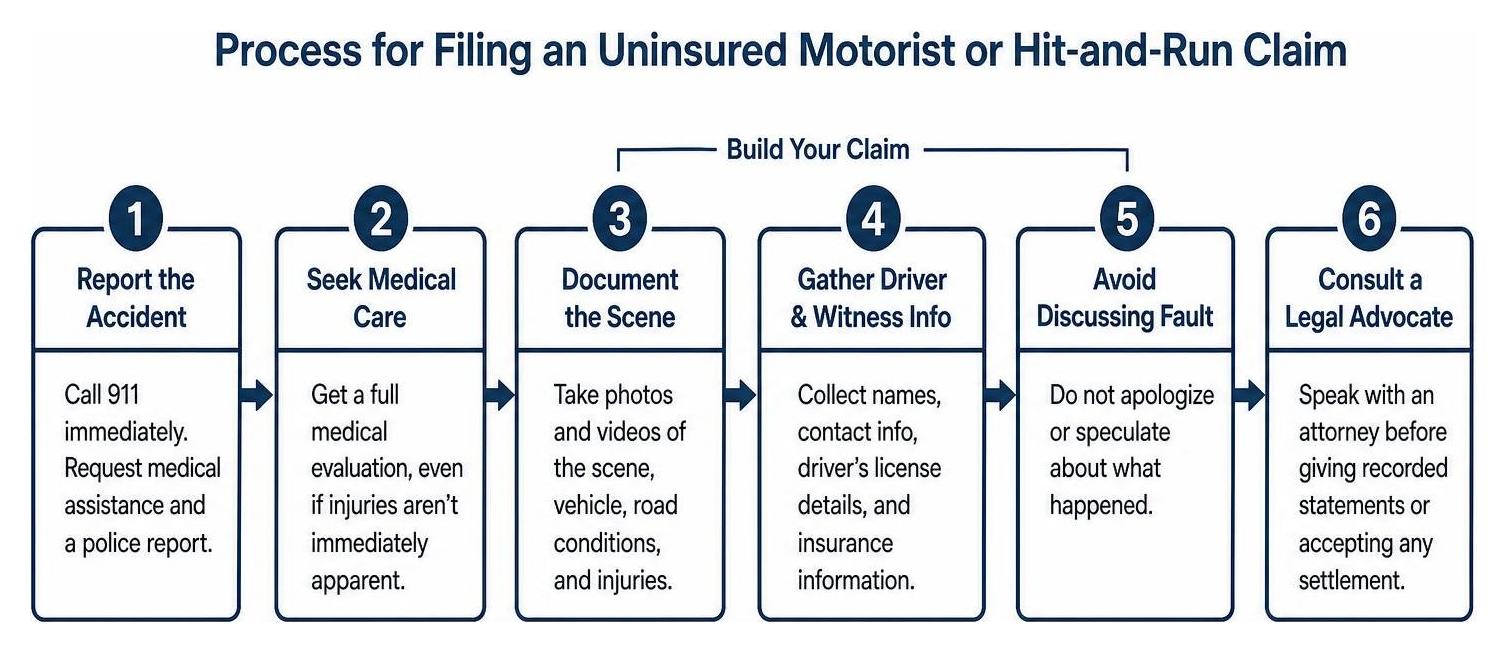
If you are victimized by a hit-and-run or an uninsured driver in Georgia:
- Uninsured Motorist (UM) Coverage: You can file a claim under your own auto insurance policy’s Uninsured Motorist coverage — or through a household relative’s policy. In Georgia, UM coverage protects you even when you are walking as a pedestrian.
- Phantom Vehicle Claims: If a driver causes an accident or forces you into danger without making direct contact and flees, UM coverage can still apply, provided there is corroborating physical evidence or eyewitness testimony.
- Law Enforcement Investigation: Police departments use traffic cameras and license plate readers to locate hit-and-run drivers. Once identified, we can pursue claims directly against the driver and their insurer, alongside potential punitive damages.
To navigate complex policy wording and secure full policy benefits, refer to our legal guide on how an Atlanta Car Accident Lawyer Find the Best route for policy recovery.
Frequently Asked Questions About Pedestrian Accidents in Georgia
How long do I have to file a pedestrian injury claim in Georgia?
In Georgia, the general statute of limitations for personal injury claims is two years from the date of the incident (O.C.G.A. § 9-3-33). However, if the crash involved a government vehicle or occurred due to a city/county infrastructure defect, strict ante litem notice deadlines apply — sometimes as short as 6 months for municipal entities or 12 months for state agencies.
What if I was partially at fault for the crash?
Under Georgia’s modified comparative fault law, you can still collect financial recovery as long as your share of fault is under 50%. Your total payout will be reduced by your percentage of responsibility. For instance, being found 20% at fault reduces a $50,000 award to $40,000.
How much is my pedestrian accident case worth?
Settlement values vary widely based on liability clarity, available insurance policy limits, and injury severity. While minor injury settlements in Georgia may average between $15,000 and $75,000, severe or catastrophic injury cases involving permanent disability regularly exceed $500,000 or reach full policy limits.
Secure Strong Legal Representation for Your Recovery
When you or a loved one is struck by a vehicle while walking, the physical, emotional, and financial toll can feel insurmountable. You should not have to carry the burden of aggressive insurance negotiations, mounting medical debt, and lost wages alone.
At Perkins Trial Lawyers, we provide aggressive advocacy against insurance companies to pursue maximum compensation for every client we serve. We thoroughly investigate your accident, calculate the full value of your past and future losses, and fight tirelessly to protect your rights — inside and outside the courtroom.
Contact a trusted Pedestrian Accident Lawyer Atlanta at Perkins Trial Lawyers today for a free, confidential case consultation. Let us handle the legal battle so you can focus entirely on your physical healing and recovery.