When a Tractor-Trailer Wreck Changes Everything in Atlanta
If you’re looking for an Atlanta tractor-trailer wreck attorney, here’s what you need to know right away:
Quick answers for truck wreck victims in Atlanta:
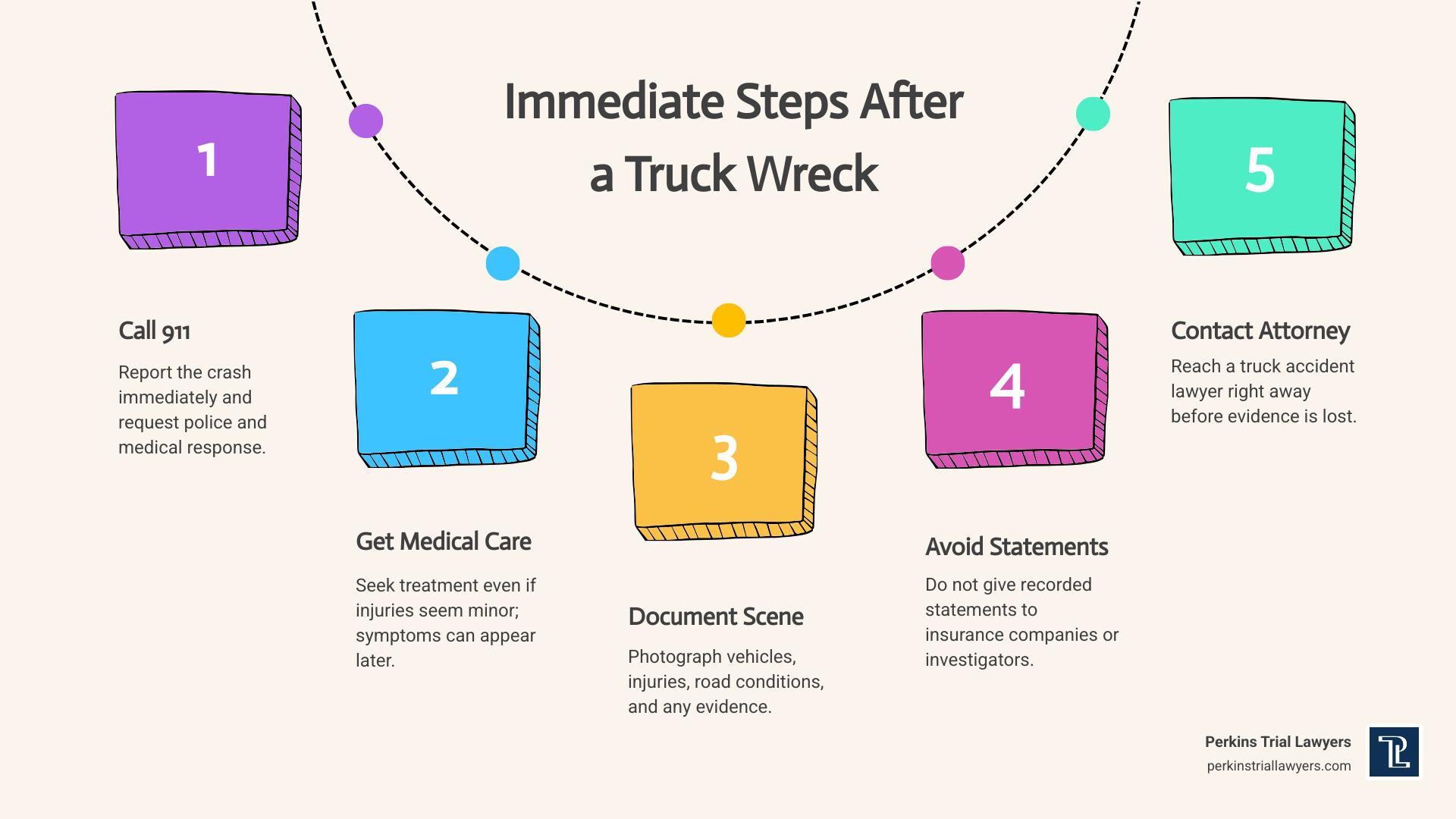
- Call 911 and get medical care — even if you feel fine
- Do not give recorded statements to any insurance company
- Contact a truck accident attorney immediately — trucking companies send investigators to the scene within hours
- You have 2 years to file a personal injury lawsuit in Georgia (O.C.G.A. § 9-3-33)
- You pay nothing upfront — truck accident attorneys work on a contingency fee basis
A collision with a fully loaded tractor-trailer is nothing like a typical car crash. These vehicles can weigh up to 80,000 pounds — roughly 20 times the weight of a passenger car. When something goes wrong at highway speed, the results are often catastrophic.
Atlanta’s roads make this risk very real. According to 2024 preliminary data for Fulton County alone, there were 13,389 crashes involving large trucks, resulting in 4,306 injuries and 37 fatalities. Large trucks account for nearly 12% of all fatal road collisions in Georgia.
The legal side of these cases is just as serious as the physical damage. Trucking companies carry multi-million dollar insurance policies, employ legal teams, and often deploy rapid-response investigators before you’ve even left the hospital. Going up against them without experienced legal help puts you at a serious disadvantage.
That’s exactly why the right legal representation matters so much — and why timing is critical.
Atlanta tractor-trailer wreck attorney vocab explained:
- Atlanta 18 wheeler injury lawyer
- Truck accident settlement Atlanta lawyer
- Fatal tractor trailer Atlanta lawyer
Why You Need an Atlanta Tractor-Trailer Wreck Attorney

When you are involved in a collision with a commercial vehicle, the legal landscape shifts dramatically compared to a standard fender-bender. Standard auto accidents usually involve two drivers and their respective personal insurance policies. In a tractor-trailer wreck, you are facing off against massive logistics corporations, regional shipping fleets, and commercial insurance carriers with policies often worth anywhere from $750,000 to upwards of $5,000,000.
These corporate entities have one primary goal: protecting their bottom line. Within hours of a serious crash on I-75, I-20, or the Perimeter, the trucking company will dispatch a rapid-response defense team directly to the scene. Their job is to gather evidence, interview witnesses, and build a narrative that minimizes their liability. If you attempt to handle this process on your own, you are bringing a pocket knife to a heavyweight fight.
Securing a qualified Atlanta Truck Accident Lawyer levels the playing field. We step in immediately to put a stop to the pressure tactics used by insurance adjusters. We take over all communications, launch an independent investigation, and build a case designed to stand up in a Georgia courtroom.
How an Atlanta tractor-trailer wreck attorney Uncovers FMCSA Violations
Commercial trucking is heavily regulated by the Federal Motor Carrier Safety Administration (FMCSA). These federal rules exist to keep the public safe from fatigued drivers and poorly maintained rigs. However, because trucking companies and drivers are under intense pressure to meet tight delivery schedules, safety rules are frequently ignored.
An experienced Atlanta tractor-trailer wreck attorney knows exactly how to comb through complex corporate records to find safety violations. Key areas of investigation include:
- Hours of Service (HOS) Limits: Under federal law, truck drivers are generally restricted to a maximum of 11 hours of driving within a 14-hour workday, following 10 consecutive hours off duty.
- Electronic Logging Devices (ELD): Modern trucks use ELDs to track driving time automatically. We compare these digital logs with toll receipts, GPS data, and fuel purchases to see if a driver falsified their records to stay on the road longer.
- Driver Qualification Files: We review the driver’s background check, commercial driver’s license (CDL) status, medical certifications, and drug testing history.
- Vehicle Inspections: Drivers must perform pre-trip and post-trip inspections, and trucking companies must keep meticulous maintenance logs.
If we uncover a violation of these federal safety standards, it provides powerful evidence of negligence that we can use to hold the trucking company accountable. To learn more about how these regulations impact your claim, check out our guide on finding a Tractor Trailer Accident Lawyer Atlanta.
What to Look for in an Atlanta tractor-trailer wreck attorney
Not all personal injury law firms are equipped to handle the unique challenges of commercial truck litigation. Many high-volume “settlement mills” treat truck wrecks exactly like car accidents, which can result in leaving millions of dollars on the negotiating table. When looking for the right attorney to handle your case, look for these key indicators:
- A Focus on Trial Readiness: Trucking companies do not offer fair settlements out of the goodness of their hearts. They pay maximum compensation only when they know your legal team is fully prepared to take the case to a jury.
- Financial Resources: Litigating a tractor-trailer case is incredibly expensive. It requires hiring accident reconstructionists, trucking industry safety practitioners, and medical life care planners. Your law firm must have the financial strength to fund these upfront costs.
- A Contingency Fee Structure: You should never have to pay out-of-pocket legal fees to get justice. A reputable firm will handle your case on a contingency basis, meaning they only get paid if they successfully recover money for you.
Before making your choice, we recommend reading through our Atlanta Semi Truck Accident Lawyer Ultimate Guide to understand the qualities that truly set a dedicated advocate apart.
Understanding the Causes and Severity of Atlanta Truck Wrecks
The physics of a commercial truck collision make it inherently different from a collision between passenger cars. An 80,000-pound vehicle traveling at 70 mph on I-285 requires the length of an entire football field just to come to a complete stop under ideal conditions. When a truck driver is distracted, fatigued, or driving too fast for the weather, that stopping distance increases dramatically, turning the truck into a rolling wall of steel.
This sheer difference in mass explains why truck crashes result in such disproportionately severe injuries for the occupants of smaller vehicles. To help visualize these differences, consider the following comparison:
| Feature | Passenger Car Accidents | Tractor-Trailer Wrecks |
|---|---|---|
| Average Vehicle Weight | 3,000 to 4,000 pounds | Up to 80,000 pounds (fully loaded) |
| Applicable Laws | Standard Georgia traffic laws | Georgia traffic laws + strict FMCSA federal regulations |
| Typical Insurance Limits | $25,000 to $100,000 | $750,000 to $5,000,000+ commercial policies |
| Primary Liable Parties | Usually just the driver | Driver, trucking company, cargo loader, manufacturer |
| Evidence Involved | Police report, basic photos, witness statements | Black box data, ELD logs, maintenance history, dispatch records |
| Severity of Injuries | Whiplash, broken bones, moderate soft tissue damage | Traumatic brain injuries, spinal cord damage, amputations, death |
When you are dealing with a crash of this magnitude, you need a legal team that understands the complex physics and mechanics involved. For a deeper look into why these cases require a highly aggressive legal approach, read our article on Atlanta Truck Wrecks: Why You Need a Heavyweight Lawyer for a Heavyweight Crash.
Common Causes of Commercial Vehicle Collisions
While some truck accidents are caused by sudden, unavoidable road hazards, the vast majority are entirely preventable and stem from human error or corporate neglect. The most common causes of commercial vehicle collisions in the Atlanta metro area include:
- Driver Fatigue: Despite strict hours-of-service limits, many drivers operate while severely sleep-deprived. Tight delivery windows and financial incentives for fast shipping encourage drivers to push past their physical limits.
- Distracted Driving: Looking away from the road for just a few seconds can be deadly when driving a semi-truck. Texting, navigating GPS units, or using dispatch radios are frequent sources of distraction.
- Speeding and Aggressive Driving: Truck drivers often travel too fast for traffic or weather conditions, making it impossible to stop safely when traffic suddenly grinds to a halt on Atlanta’s highways.
- Mechanical Failures: Faulty brake systems, worn steering components, and sudden tire blowouts can cause a driver to lose complete control of their rig.
- Improper Cargo Loading: If cargo is loaded unevenly or is not secured properly, it can shift during a turn, causing a catastrophic rollover or jackknife accident.
No matter the specific circumstances of your crash, a skilled Atlanta Truck Collision Lawyer will work to uncover the root cause and hold the negligent parties responsible.
Catastrophic Injuries and Long-Term Care Needs
The physical impact of a semi-truck wreck often leaves survivors with permanent, life-altering injuries. These are not injuries that heal after a few weeks of physical therapy; they frequently require ongoing medical care, multiple surgeries, and lifetime support. Common catastrophic injuries include:
- Traumatic Brain Injuries (TBIs): Severe concussions or open-head wounds can permanently alter cognitive function, memory, motor skills, and personality.
- Spinal Cord Injuries and Paralysis: Damage to the spinal cord can result in partial or complete paralysis (paraplegia or quadriplegia), requiring wheelchair accessibility modifications to the victim’s home and vehicle.
- Amputations and Loss of Limbs: The crushing force of a commercial truck crash can cause traumatic amputations or leave limbs so severely damaged that surgical amputation is required.
- Internal Organ Damage: Severe blunt-force trauma can cause internal bleeding and permanent damage to critical organs like the kidneys, spleen, lungs, or liver.
For victims facing these devastating diagnoses, our primary goal is securing the resources needed to cover lifetime care. We work closely with medical practitioners and economists to build a comprehensive life care plan. For more details on pursuing maximum compensation for these life-changing injuries, refer to our Atlanta 18 Wheeler Injury Lawyer Guide to Maximum Compensation.
Identifying Liable Parties in a Commercial Trucking Claim
One of the most complex aspects of a tractor-trailer crash case is that liability rarely stops with the truck driver. While the driver’s immediate actions on the road may have triggered the crash, a web of corporate relationships often shares the blame. Identifying every single liable party is crucial, as it allows us to tap into multiple commercial insurance policies to secure full compensation.
Depending on the details of your accident, we may file claims against:
- The Truck Driver: For negligent behaviors like speeding, distracted driving, or driving under the influence.
- The Trucking Company (Motor Carrier): For their own negligent business practices or under the legal doctrine of respondeat superior, which holds employers liable for the actions of their employees.
- The Cargo Loading Company: If improperly loaded or poorly secured cargo shifted and caused the driver to lose control.
- The Maintenance Provider: If a third-party mechanic failed to identify and repair critical safety issues, such as worn brake pads or defective tires.
- The Vehicle or Parts Manufacturer: If a design or manufacturing defect in the truck’s steering, brakes, or tires caused a mechanical failure on the road.
Sorting through these complex corporate relationships requires a thorough legal investigation. If you are preparing to take legal action, read our guide on the Atlanta 18 Wheeler Lawsuit Atlanta Attorney Navigating the Road to a Settlement.
Trucking Company Corporate Liability
Trucking companies are businesses driven by profit margins. Unfortunately, some companies prioritize speed and revenue over public safety. When a trucking company engages in systemic negligence, they can be held directly liable for the resulting crashes. Examples of corporate negligence include:
- Negligent Hiring: Failing to conduct proper background checks, verify commercial driver’s licenses, or review a driver’s past safety violations before putting them behind the wheel.
- Inadequate Training: Sending underqualified drivers onto the road without providing proper instruction on handling heavy loads or navigating hazardous conditions.
- Coerced Scheduling: Forcing or encouraging drivers to violate FMCSA hours-of-service limits to meet unrealistic delivery deadlines.
- Failure to Inspect and Maintain: Ignoring routine maintenance schedules or delaying critical repairs to keep trucks on the road and earning revenue.
Holding these corporations accountable requires a deep understanding of trucking industry standards. For more information on how we build cases against negligent trucking companies, read our Atlanta Big Rig Accident Attorney Guide.
Third-Party Maintenance and Cargo Loading Failures
In many modern shipping operations, trucking companies outsource key tasks to third-party contractors. While this may make business sense for them, it can create a dangerous divide in safety oversight.
For instance, if a third-party maintenance company signs off on a truck’s brake system despite knowing the pads are dangerously thin, that company can be held liable if those brakes fail on the highway. Similarly, if a shipping warehouse loads a trailer unevenly, causing a devastating rollover on an exit ramp, the cargo loading company shares in the liability.
These cases require tracking down shipping manifests, loading logs, and maintenance contracts to prove exactly who was responsible for the failure. To understand how cargo shifts and maintenance failures contribute to dangerous rollover accidents, consult our Atlanta 18 Wheeler Rollover Atlanta Lawyer Survival Guide.
Crucial Evidence and the Tactics of Insurance Companies
In a tractor-trailer wreck case, physical evidence is the foundation of your claim. However, unlike a standard car accident where a police report and a few photos of the vehicle damage may suffice, truck accident claims require a mountain of technical data.
The most critical pieces of evidence we work to secure include:
- The Truck’s Black Box (Electronic Control Module): This device records critical data in the seconds leading up to a crash, including the truck’s speed, brake application, steering angles, and throttle position.
- Electronic Logging Device (ELD) Data: To verify if the driver was operating within legal hours-of-service limits.
- In-Cab Camera Footage: Many commercial fleets use dual-facing cameras that record both the road ahead and the driver’s actions inside the cab.
- Maintenance and Inspection Records: To prove if the trucking company ignored critical mechanical issues.
Securing this evidence requires quick action. Under federal law, trucking companies are only required to keep certain records for a limited time. If we do not send a formal spoliation letter immediately, the trucking company may legally destroy or overwrite this critical data.
While we are working to preserve this evidence, the trucking company’s insurance adjusters will be working to undermine your claim. They may contact you shortly after the crash, offering a quick, lowball settlement while you are still in pain and vulnerable. They may also ask you to give a recorded statement, hoping you will say something they can use to shift the blame onto you.
Do not fall for these tactics. Never sign anything or give a recorded statement without speaking to your attorney first. To learn more about how we counter these corporate tactics, read our article on the Atlanta Truck Accident Settlement Atlanta Lawyer.
Georgia Laws and Timelines for Filing a Claim
If you’ve been injured in an Atlanta truck wreck, you must navigate several specific state laws to protect your right to compensation.
First and foremost is the statute of limitations. Under Georgia law (O.C.G.A. § 9-3-33), you generally have two years from the date of the accident to file a personal injury lawsuit. If you miss this deadline, the court will dismiss your case, and you will lose your right to pursue compensation forever.
There are very few exceptions to this two-year rule. However, if the truck was owned or operated by a government entity (such as a municipal garbage truck or a state vehicle), you may be required to file a formal notice of claim—known as an ante litem notice—within just six months of the accident. This makes consulting a lawyer early on absolutely vital.
Georgia also follows a modified comparative negligence system. This means you can still recover compensation even if you were partially at fault for the accident, provided your share of the blame is less than 50%. However, your total recovery will be reduced by your percentage of fault. For example, if a jury awards you $100,000 in damages but finds you 20% responsible for the crash, your final payout will be reduced to $80,000.
If you have lost a loved one in a truck collision, the legal process is handled through a wrongful death claim, which carries its own set of complex rules regarding who can file and what damages can be recovered. For detailed information on these sensitive cases, please review our guide from an Atlanta Wrongful Death Lawyer.
Frequently Asked Questions About Atlanta Tractor-Trailer Wrecks
How long do I have to file a truck accident lawsuit in Georgia?
Under Georgia law (O.C.G.A. § 9-3-33), the standard deadline to file a personal injury or wrongful death lawsuit is two years from the date of the accident. However, this timeline can sometimes be paused, or “tolled,” under specific circumstances—such as if there is a pending criminal traffic citation against the truck driver, or if the victim is a minor.
Additionally, if a fatal accident occurs, the deceased person’s estate may have additional time to file certain claims. Because these legal timelines can be complicated, it is always best to consult an attorney as soon as possible. For more information, read our article on how to handle an Atlanta Fatal Truck Crash Atlanta Lawyer.
What damages can I recover after a tractor-trailer collision?
Victims of commercial truck crashes can pursue several types of compensation to help put their lives back together:
- Economic Damages: These cover your direct, measurable financial losses, such as past and future medical bills, rehabilitative therapy, lost wages, and loss of earning capacity if you can no longer return to your career.
- Non-Economic Damages: These compensate you for the intangible impact of the crash, including physical pain and suffering, emotional distress, mental anguish, disfigurement, and loss of enjoyment of life.
- Punitive Damages: In rare cases where the trucking company or driver acted with willful misconduct or extreme recklessness (such as driving under the influence of drugs or alcohol), the court may award punitive damages to punish the wrongdoer and deter similar behavior in the future.
To understand the full scope of what your claim may be worth, consult our guide from an Atlanta Personal Injury Lawyer in Atlanta.
What should I do immediately after a truck accident in Atlanta?
The steps you take in the minutes and days following a crash can have a massive impact on both your physical health and your future legal claim:
- Seek Medical Care Immediately: Even if you feel fine, go to an emergency room or urgent care. Adrenaline can mask serious injuries like internal bleeding or concussions.
- Report the Crash: Call 911 and make sure a formal police report is filed.
- Document the Scene: If you are physically able, take photos of the vehicle damage, road conditions, skid marks, and any visible injuries. Collect contact information from any witnesses.
- Do Not Admit Fault: Avoid saying “I’m sorry” or discussing the details of the crash with the other driver or insurance adjusters.
- Hire a Dedicated Attorney: Contact a qualified legal team before speaking with the trucking company’s insurance carrier.
For a step-by-step breakdown of how to protect yourself after a crash, read our advice from an Atlanta Proven Injury Lawyer.
Secure Your Future with Perkins Trial Lawyers
At Perkins Trial Lawyers, we know that a tractor-trailer wreck does more than just damage your vehicle—it can completely upend your life, your career, and your family’s financial stability.
We are committed to providing tireless advocacy for truck accident victims throughout the Atlanta metro area. We do not believe in quick, easy settlements that leave you struggling to pay for future medical care. Instead, we build every single case with the preparation and detail needed for trial, sending a clear message to the insurance companies that we are ready to fight for the maximum compensation you deserve.
If you or a loved one has been injured in a commercial truck collision, you do not have to face the corporate legal teams alone. We are here to carry the legal burden so you can focus entirely on your physical recovery.
Contact us today to schedule your free, no-pressure consultation, and let us help you take the first step toward securing your future. For more details on how we can help, visit our Atlanta Truck Accident Lawyer service page.