 Skip to content
What You Need to Know About an Atlanta Premises Liability Lawsuit
A premises liability lawsuit is a legal claim filed when someone gets hurt on another person’s property — and that property owner’s negligence caused the injury.
If you were hurt on someone else’s property in Atlanta, here’s the short version:
- What it is: A type of personal injury claim based on a property owner’s failure to keep their space reasonably safe
- Who can file: Anyone injured on another’s property — at a store, apartment complex, parking lot, or private home
- What you must prove: A dangerous condition existed, the owner knew or should have known about it, they failed to fix or warn about it, and you suffered real harm as a result
- Time limit in Georgia: You have 2 years from the date of injury to file a lawsuit
- What you can recover: Medical bills, lost wages, pain and suffering, and in some cases punitive damages
These cases are more common — and more serious — than most people realize. Premises liability claims make up roughly 15% of all personal injury lawsuits filed in the U.S. each year. Slip-and-fall accidents alone send over 1 million people to emergency rooms annually.
The stakes can be enormous. In February 2026, a New York jury awarded $36.4 million in a premises liability case involving a worker who slipped on cooking oil and rainwater tracked onto stairs at a supermarket. A Winter Park, Florida jury returned a verdict of over $644 million after a man fell down a dangerously steep staircase at a bar — suffering partial quadriplegia as a result.
Most cases don’t reach those numbers. But every case matters deeply to the person living with the injuries.
If you’re dealing with medical bills, missed work, and pain from an injury that wasn’t your fault, understanding how premises liability law works is the first step toward getting the compensation you deserve.
What is a Premises Liability Lawsuit?
At its core, a premises liability lawsuit is a legal mechanism that holds property owners, managers, or tenants accountable when their failure to maintain a safe environment causes someone else to suffer harm.
We often assume that if we trip, slip, or get hurt outside of our own homes, it was simply an accident or our own clumsy fault. However, the law recognizes that those who invite us onto their property—whether it is a grocery store, a parking garage, or an apartment complex—have a legal obligation to ensure we do not walk into a hidden trap.
When a property owner fails to meet this obligation, and that failure leads to severe, life-altering injuries, the victim has the right to seek financial recovery. For those injured in Georgia, partnering with a dedicated Premises Liability Lawyer in Atlanta is often the only way to level the playing field against corporate insurance companies that want to sweep these hazards under the rug.
To understand the weight of these claims, one only has to look at New York’s largest premises liability verdict from early 2026, where a $36.4 million award was handed down after a worker suffered severe spinal and brain injuries from a slip-and-fall on a slick, unmaintained supermarket ramp. The law takes property safety seriously, and so should property owners.
General Negligence vs. Premises Liability
While premises liability is a subset of personal injury law, it is distinct from general negligence. The main difference lies in what actually caused your injury:
- General Negligence (Active Conduct): This occurs when someone’s active behavior causes you harm. For example, if a grocery store employee is aggressively pushing a heavy flatbed cart through an aisle and runs directly into you, that is general negligence.
- Premises Liability (Static Conditions): This occurs when a physical, passive condition on the property itself causes your injury. If that same employee spills a gallon of liquid detergent, leaves it on the floor without a warning sign, and you slip on it an hour later, your claim falls under premises liability.
In short, general negligence is about what someone did, while premises liability is about what someone failed to fix or warn you about on their property.
Key Elements of a Premises Liability Lawsuit
You cannot sue a property owner simply because you fell on their property. To win a premises liability lawsuit in Georgia, we must establish four key legal elements:
- Duty of Care: The defendant owned, leased, or controlled the property, meaning they owed you a legal duty to keep the premises safe.
- Breach of Duty: The property owner breached that duty by allowing an unreasonably dangerous condition to exist on the premises.
- Causation: The dangerous condition directly caused your slip, trip, fall, or injury.
- Actual Damages: You suffered real, documentable physical and financial injuries (such as medical bills or lost wages).
To prove a breach of duty, we must also show that the property owner had notice of the hazard. Notice comes in two forms:
- Actual Notice: The owner or their employees knew the hazard existed. For example, a customer told the manager about a broken step, or an employee wrote a work order to fix a leaking pipe but ignored it.
- Constructive Notice: The owner should have known about the hazard through the exercise of reasonable care. If a puddle of water sits in a grocery store aisle for three hours, the store cannot claim ignorance. A reasonable inspection schedule would have uncovered it.
Visitor Classifications and the Duty of Care in Georgia
Under Georgia law, a property owner’s duty of care is not one-size-fits-all. The level of safety and inspection an owner owes you depends entirely on why you were on the property. Georgia divides visitors into three distinct categories: invitees, licensees, and trespassers.
| Visitor Category | Definition | Duty of Care Owed by Owner | Common Examples |
|---|---|---|---|
| Invitee | Present for the mutual benefit of the visitor and the owner (business or public reasons) | Highest Duty: Must keep premises safe, inspect regularly, and repair or warn of hazards | Grocery shoppers, hotel guests, restaurant diners, apartment tenants in common areas |
| Licensee | Present for their own convenience or entertainment with the owner’s permission | Medium Duty: Must not willfully or wantonly cause harm; must warn of known, hidden dangers | Social houseguests, door-to-door salesmen, utility workers |
| Trespasser | Present on the property without permission or legal right | Lowest Duty: No duty to keep property safe; must only avoid intentional harm or traps | Unlawful intruders, teenagers cutting across private land |
Invitees: The Highest Level of Protection
If you enter a business to buy something, eat, or even just browse, you are an invitee. Because the property owner stands to benefit financially from your presence, they owe you the highest duty of care.
This duty requires business owners to actively inspect their property for hidden dangers, clean up spills promptly, maintain walkways, and put up clear warning signs if a hazard cannot be fixed immediately.
When businesses fail in this duty, juries hold them accountable. For example, in the high-profile Publix slip and fall verdict from March 2026, a mother was awarded nearly $4 million after slipping on a liquid substance in a soft drink aisle. The jury found the supermarket 100% at fault because they failed to maintain a safe floor for their invitees.
Licensees: Social Guests and Permitted Visitors
A licensee is someone who is on the property with the owner’s permission, but not for a business purpose. The most common example is a social guest invited over to a friend’s house for dinner.
While property owners do not have to perform rigorous, commercial-grade safety inspections for social guests, they still cannot lead them into a trap. An owner must warn licensees of any hidden, dangerous conditions they know exist that the guest is unlikely to discover on their own—such as a loose deck railing or a aggressive dog.
Trespassers and the Attractive Nuisance Doctrine
Generally, property owners owe virtually no duty of care to trespassers who enter their land without permission. The owner simply cannot set intentional traps (like spring-guns) or willfully injure them.
However, a major exception to this rule exists to protect children: the Attractive Nuisance Doctrine.
Children do not understand danger the same way adults do. If a property owner has something on their land that is highly appealing to a child—such as an unsecured swimming pool, a trampoline, or heavy construction machinery—they have a legal duty to secure it. If a child trespasses, gets drawn to an unfenced pool, and drowns, the property owner can be held fully liable for failing to put up a proper fence or gate.
Common Hazards on Commercial and Residential Properties
Unsafe conditions can take many forms, but they almost always stem from deferred maintenance or a business cutting corners on safety. If you have been hurt due to a physical hazard, reading The Ultimate Guide to Slip and Fall Lawyers in Atlanta can help you understand how these specific dangers are evaluated in court.
Slip and Fall Accidents
Slipping, tripping, and falling are the leading causes of premises liability claims. These are not minor “accidents”—they often result in broken bones, torn ligaments, and traumatic brain injuries. Common culprits include:
- Wet floors from mopping, leaks, or tracked-in rain without warning cones
- Loose, torn, or bulging carpets in hotel hallways or office buildings
- Unmarked changes in floor elevation or uneven sidewalk curbs
- Debris, fallen merchandise, or electrical cords left in retail walkways
If you find yourself injured due to these conditions, consulting a Slip and Fall Attorney in Atlanta is vital. Experienced legal teams understand how to secure store security footage before it is taped over, helping you build a strong case. To learn more about how we fight back against corporate defenses, review our guide on Top Slip Fall Attorneys Atlanta Fighting Insurers.
Negligent Security and Criminal Assaults
Premises liability is not limited to physical trips and slips. If you are assaulted, robbed, or shot in a commercial parking lot, apartment complex, or shopping mall, the property owner may be liable for negligent security.
Property owners have a duty to provide reasonable security measures, especially if the property is located in a high-crime area or has a history of prior criminal activity. Negligent security hazards include:
- Broken locks on apartment gates or hotel room doors
- Burned-out lights in dark parking garages or stairwells
- A complete lack of security guards or surveillance cameras in areas known for criminal activity
- Negligent hiring or retention of dangerous employees
If you or a loved one was a victim of a crime on a commercial property, reaching out to a Security Negligence Attorney in Atlanta can help you hold the negligent property owner accountable for failing to keep you safe.
Dog Bites and Animal Attacks
In Georgia, dog bites are also treated under the umbrella of premises liability and owner negligence. If a property owner keeps a dog that they know (or should know) has vicious tendencies, they must manage the animal safely.
When owners violate local leash laws or fail to secure an aggressive animal, the physical and emotional scars of an attack can last a lifetime. Dog bite claims result in over $1 billion in insurance payouts annually in the United States, helping victims cover the high costs of reconstructive surgeries and psychological therapy.
Defenses, Comparative Fault, and the “Open and Obvious” Doctrine
When we file a premises liability lawsuit, the property owner’s insurance company does not simply write a check. They will use every legal defense available to deflect blame, reduce their financial liability, or get your case dismissed entirely.
The Open and Obvious Defense
The most common defense used by property owners is the “Open and Obvious” Doctrine.
Under this rule, a property owner cannot be held liable for an injury if the hazard was so visible and apparent that a reasonable person would have seen and avoided it. The law assumes that you have a basic duty to watch where you are walking.
However, this defense has major limits, especially when the property owner created a distraction. Take the bizarre Waffle House distraction lawsuit where an 84-year-old man fell face-first over an abnormally high curb. The lawsuit argued that the restaurant’s bright, eye-catching window advertisements for a strawberry shortcake waffle were intentionally designed to distract pedestrians. The plaintiff’s attorney noted that it is highly disingenuous for a business to spend thousands of dollars trying to grab your eyes, and then blame you for not looking at your feet.
Furthermore, courts recognize that some hazards require careful context to appreciate. In a landmark Fourth Circuit ruling on chemical cleaning hazards, the court held that a wet parking lot line was not an “open and obvious” hazard because the store employee had washed it with water mixed with a powdered concrete cleaner. Because there were no warning cones, safety vests, or signs, a regular customer could not have known the wet spot was treated with slick, dangerous chemicals.
Georgia’s Modified Comparative Negligence Rule
If a property owner can prove you were partially at fault for your own fall—perhaps you were looking at your phone or wearing inappropriate footwear—Georgia’s modified comparative negligence rules come into play.
Under Georgia law (O.C.G.A. § 51-12-33):
- The 50% Bar: You can only recover damages if you are less than 50% at fault for the accident. If a jury finds you 50% or more responsible, you receive nothing.
- Damages Reduction: If you are less than 50% at fault, your financial recovery is reduced by your exact percentage of blame. For example, if a jury awards you $100,000 in damages but finds you 20% at fault for texting while walking, your final payout is reduced to $80,000.
Insurance companies know this rule inside and out. They will dig through your medical records, social media, and statements to try and push your percentage of fault over that 50% threshold. This is why having strong legal representation on your side is critical.
Frequently Asked Questions About Property Owner Negligence
What is the statute of limitations for an Atlanta premises liability lawsuit?
In Georgia, the statute of limitations for a premises liability claim is two years from the exact date of your injury. If you fail to file a formal lawsuit before this window closes, you lose your legal right to seek compensation forever.
Note: If your injury occurred on government-owned property (like a public school, city park, or MARTA station), the deadlines to file an official notice of claim are much shorter—often just 6 months. Do not wait to consult a legal team.
What damages can I recover in a property injury claim?
If your claim is successful, you can recover “compensatory damages” designed to make you financially whole again. These include:
- Economic Damages: Medical bills (past and future), physical therapy costs, lost wages, and loss of future earning capacity.
- Non-Economic Damages: Pain and suffering, mental anguish, scarring, disfigurement, and loss of enjoyment of life.
- Punitive Damages: In rare cases where the property owner’s conduct was incredibly reckless, malicious, or showed an entire lack of care, the court may award punitive damages to punish the owner.
How does insurance affect a premises liability settlement?
Almost all premises liability claims are paid out through insurance policies—commercial general liability (CGL) policies for businesses, or homeowners/renters insurance for private residences.
Insurance companies are profit-driven corporations. Their adjusters are trained to minimize payouts. They may offer you a quick, lowball settlement immediately after your injury before you fully understand the extent of your medical needs. Accepting this settlement requires signing a liability release, meaning you can never ask for more money later if you need surgery. We handle all communication and negotiations with these insurers so you can focus on healing.
Secure Your Rights with Dedicated Atlanta Legal Representation
A serious property injury can turn your life upside down in a fraction of a second. Suddenly, you are facing mounting medical bills, lost income, and physical pain—all because a property owner decided to ignore a safety hazard to save a few dollars.
You do not have to fight this battle alone. At Perkins Trial Lawyers, we provide tireless, aggressive advocacy for personal injury victims throughout the Atlanta area. We know the tactics insurance companies use to delay, deny, and devalue legitimate claims, and we refuse to let them take advantage of our clients.
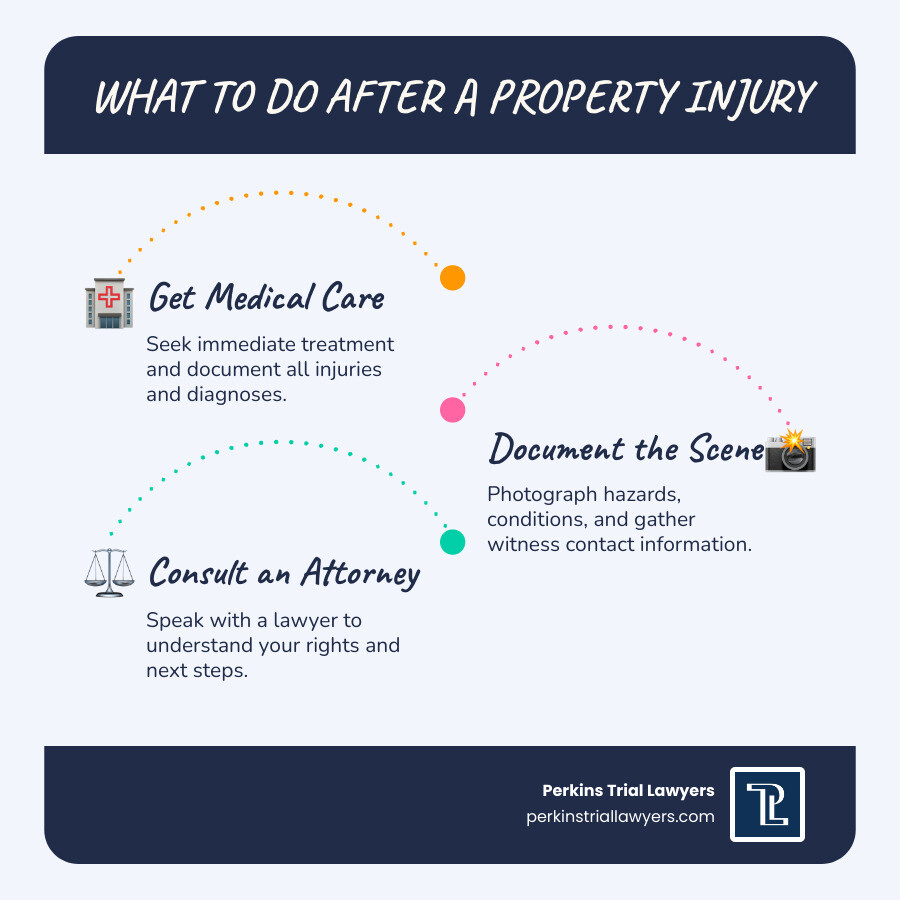
If you or a loved one has been hurt on someone else’s property, let us handle the heavy legal lifting. Contact our Atlanta office today to schedule a free, no-obligation consultation with a dedicated Premises Liability Lawyer in Atlanta. We work on a contingency fee basis, meaning you pay us absolutely nothing upfront, and we only get paid if we win your case. Let’s get you the maximum compensation you deserve.
